Accendo Reliability

Your Reliability Engineering Professional Development Site

  • Home
  • About
    • Contributors
    • About Us
    • Colophon
    • Survey
  • Reliability.fm
    • Speaking Of Reliability
    • Rooted in Reliability: The Plant Performance Podcast
    • Quality during Design
    • CMMSradio
    • Way of the Quality Warrior
    • Critical Talks
    • Asset Performance
    • Dare to Know
    • Maintenance Disrupted
    • Metal Conversations
    • The Leadership Connection
    • Practical Reliability Podcast
    • Reliability Hero
    • Reliability Matters
    • Reliability it Matters
    • Maintenance Mavericks Podcast
    • Women in Maintenance
    • Accendo Reliability Webinar Series
  • Articles
    • CRE Preparation Notes
    • NoMTBF
    • on Leadership & Career
      • Advanced Engineering Culture
      • ASQR&R
      • Engineering Leadership
      • Managing in the 2000s
      • Product Development and Process Improvement
    • on Maintenance Reliability
      • Aasan Asset Management
      • AI & Predictive Maintenance
      • Asset Management in the Mining Industry
      • CMMS and Maintenance Management
      • CMMS and Reliability
      • Conscious Asset
      • EAM & CMMS
      • Everyday RCM
      • History of Maintenance Management
      • Life Cycle Asset Management
      • Maintenance and Reliability
      • Maintenance Management
      • Plant Maintenance
      • Process Plant Reliability Engineering
      • RCM Blitz®
      • ReliabilityXperience
      • Rob’s Reliability Project
      • The Intelligent Transformer Blog
      • The People Side of Maintenance
      • The Reliability Mindset
    • on Product Reliability
      • Accelerated Reliability
      • Achieving the Benefits of Reliability
      • Apex Ridge
      • Breaking Bad for Reliability
      • Field Reliability Data Analysis
      • Metals Engineering and Product Reliability
      • Musings on Reliability and Maintenance Topics
      • Product Validation
      • Reliability by Design
      • Reliability Competence
      • Reliability Engineering Insights
      • Reliability in Emerging Technology
      • Reliability Knowledge
    • on Risk & Safety
      • CERM® Risk Insights
      • Equipment Risk and Reliability in Downhole Applications
      • Operational Risk Process Safety
    • on Systems Thinking
      • The RCA
      • Communicating with FINESSE
    • on Tools & Techniques
      • Big Data & Analytics
      • Experimental Design for NPD
      • Innovative Thinking in Reliability and Durability
      • Inside and Beyond HALT
      • Inside FMEA
      • Institute of Quality & Reliability
      • Integral Concepts
      • Learning from Failures
      • Progress in Field Reliability?
      • R for Engineering
      • Reliability Engineering Using Python
      • Reliability Reflections
      • Statistical Methods for Failure-Time Data
      • Testing 1 2 3
      • The Hardware Product Develoment Lifecycle
      • The Manufacturing Academy
  • eBooks
  • Resources
    • Special Offers
    • Accendo Authors
    • FMEA Resources
    • Glossary
    • Feed Forward Publications
    • Openings
    • Books
    • Webinar Sources
    • Journals
    • Higher Education
    • Podcasts
  • Courses
    • Your Courses
    • 14 Ways to Acquire Reliability Engineering Knowledge
    • Live Courses
      • Introduction to Reliability Engineering & Accelerated Testings Course Landing Page
      • Advanced Accelerated Testing Course Landing Page
    • Integral Concepts Courses
      • Reliability Analysis Methods Course Landing Page
      • Applied Reliability Analysis Course Landing Page
      • Statistics, Hypothesis Testing, & Regression Modeling Course Landing Page
      • Measurement System Assessment Course Landing Page
      • SPC & Process Capability Course Landing Page
      • Design of Experiments Course Landing Page
    • The Manufacturing Academy Courses
      • An Introduction to Reliability Engineering
      • Reliability Engineering Statistics
      • An Introduction to Quality Engineering
      • Quality Engineering Statistics
      • FMEA in Practice
      • Process Capability Analysis course
      • Root Cause Analysis and the 8D Corrective Action Process course
      • Return on Investment online course
    • Industrial Metallurgist Courses
    • FMEA courses Powered by The Luminous Group
      • FMEA Introduction
      • AIAG & VDA FMEA Methodology
    • Barringer Process Reliability Introduction
      • Barringer Process Reliability Introduction Course Landing Page
    • Fault Tree Analysis (FTA)
    • Foundations of RCM online course
    • Reliability Engineering for Heavy Industry
    • How to be an Online Student
    • Quondam Courses
  • Webinars
    • Upcoming Live Events
    • Accendo Reliability Webinar Series
  • Calendar
    • Call for Papers Listing
    • Upcoming Webinars
    • Webinar Calendar
  • Login
    • Member Home
Home » Articles » on Maintenance Reliability » Maintenance Management

Maintenance Management

This Maintenance Management article series introduces and discusses maintenance management strategies, systems and processes for optimizing plant and equipment maintenance, maximizing equipment uptime, and for minimizing operating costs.


This Maintenance Management series aims to provide reputed, useful content that improves an operation’s and organization’s maintenance effectiveness.


The Maintenance Management series of articles are provided with permission of  Lifetime Reliability Solutions.


NOTE: The series does not cover related commercial or vendor software or database management applications.

by Mike Sondalini Leave a Comment

Business Risk Hierarchy

Business Risk Hierarchy

There is a direct connection between the microstructure health of your equipment parts and your operational and business success

There are key concepts and practices that an organization needs to use if they want optimal asset health from their plant and equipment. The greatest successes come when operating and safety risks are eliminated at their root causes. The Plant Wellness Way EAM methodology focuses on getting lasting asset health so world class operating performance is normal in your company day-after-day. Its processes and analysis tools create a system-of-reliability that gets exceptional asset health and delivers the greatest ROI from each operating asset throughout its service life.

Risk is the total losses suffered when any asset’s components may fail. The causes of failure are the environmental and operating stresses that affect a component’s microstructure. This means that world class reliability is the effective, complete remove of the causes of failure, also known as risks, from your operations.

Figure 1 contains all you need to know in order to bring any operation world class reliability and improved operating profits. It shows the direct connections between the causes of business and operational risks and the reliability of your assets. When you make your assets reliable, and develop systems that support their component health, they will take your company and operations to the heights of operating success and profits.
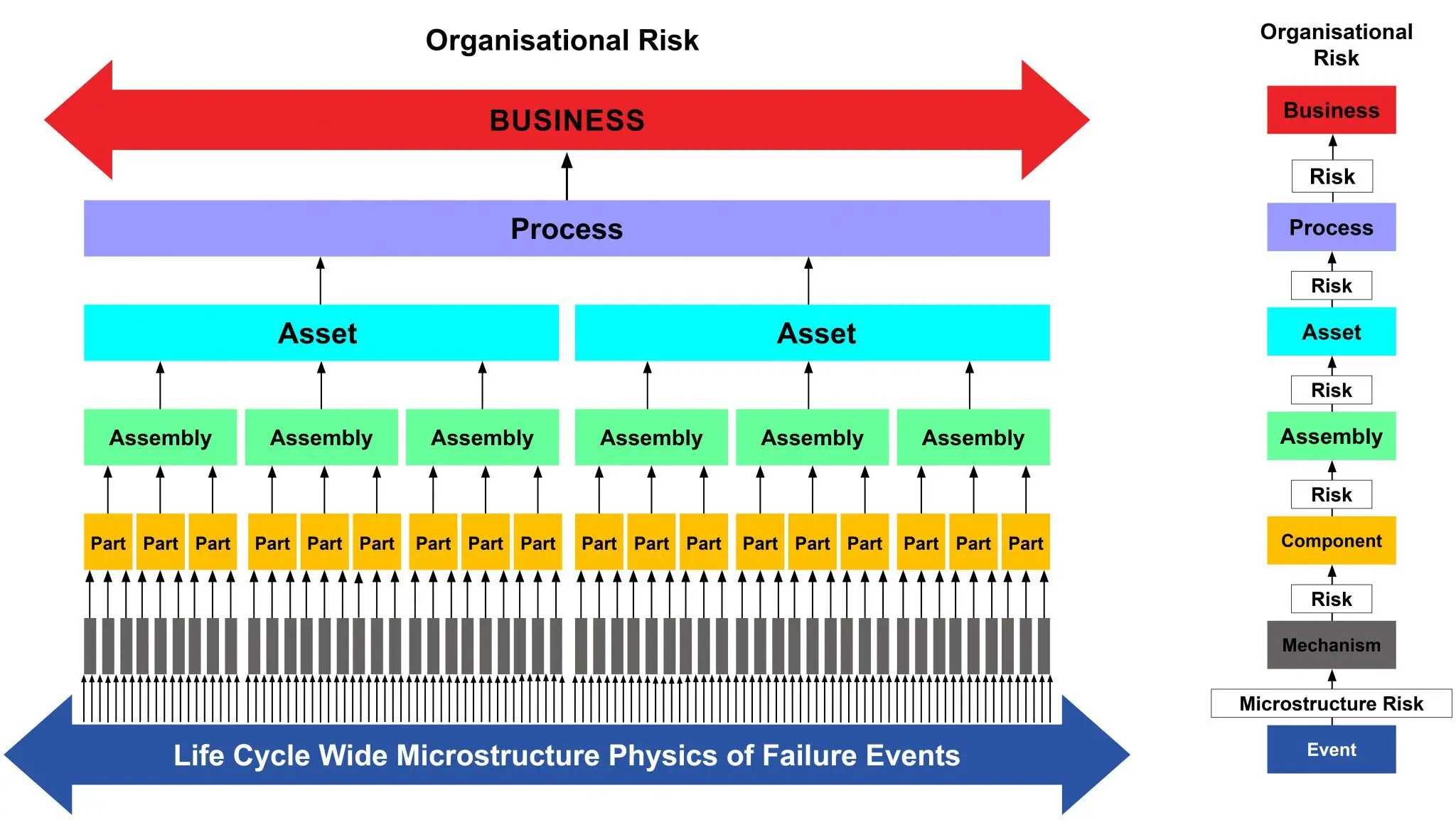
Figure 1. Hierarchy of Risk from Component to Organization
Source: Thanks to Paul Price, a UK condition monitoring consultant, for use of this concept.

Risk Hierarchy

Every asset failure can be traced back to what was done to its components’ during their lifetime. As shown in Figure 1, there are dependency links between the initial Physics of Failure mechanisms and an organization’s performance. These links run up the hierarchy of risk, with each level relying on multiple links from below. This means that organizations can have countless causes of failure (risks) in their systems and yet still operate and be somewhat profitable. However, the state of health at each level of the hierarchy adds risk and can become a larger problem for the levels above it.

Ultimately, the reliability of every physical asset and the subsequent risks they bring to a business depends on how well you eliminate and prevent the causes of Physics of Failure mechanisms throughout its parts’ life cycles.

Common standard maintenance strategies look only at assets and assembly levels of the dependency hierarchy. As a result, failures are never, truly, prevented. The causes of failure are allowed to continue to affect the microstructure of the component until the damage is so server that is can be detected by the behavior of the asset. If failure mechanisms are present in equipment, they will generate the risk of failure.

Physics of Failure events are the operating stresses and local environment affecting a component’s microstructure. Thing such as healthy lubricant, correct lubricant film thickness, proper interference fit between mating parts, trueness of component shape, fineness of surface finish, subsurface stress levels, adequate load distribution, and so on, all impact the health of a component and it’s reliability.

What makes Plant Wellness Way such an effective system, is the focus is on the removing the causes of failure from occurring to begin with. When there is no risk at the Physics of Failure mechanism level, then you can be sure an asset has the greatest chance of exceptional reliability and the least risk of operating failure.

Removing Physics Of Failure Mechanisms

High equipment reliability is within the reach of every business. Reliability is malleable by choosing policies and quality practices at each level of the dependency hierarchy.

At mechanism level, set demanding quality standards for equipment parts so you get outstanding reliability during operation.

At component level, use precision that delivers long service lives to parts and apply only the highest-quality operating and maintenance practices.

At assembly level, use more robust, durable materials for components so that they take greater stresses and don’t degrade.

At the asset level, replace assets early with the newest models rather than wait too long and get numerous failures and lower productivity. Be willing to pay for higher quality equipment so your company can make fortunes from fewer failures.

For the process level, have right knowledge everywhere and only used the right practices, insuring they are done rightly.

At the business level, these requirements need to be incorporated into corporate thinking when you make engineering, asset management, operational or maintenance decisions.

The most beneficial maintenance strategies eliminate Physics of Failure mechanisms and reduce the total risk that a part carries during operation. The lower down the dependency hierarchy that good decisions are made, and precision quality controls installed, the more comprehensive is the risk control strategy.

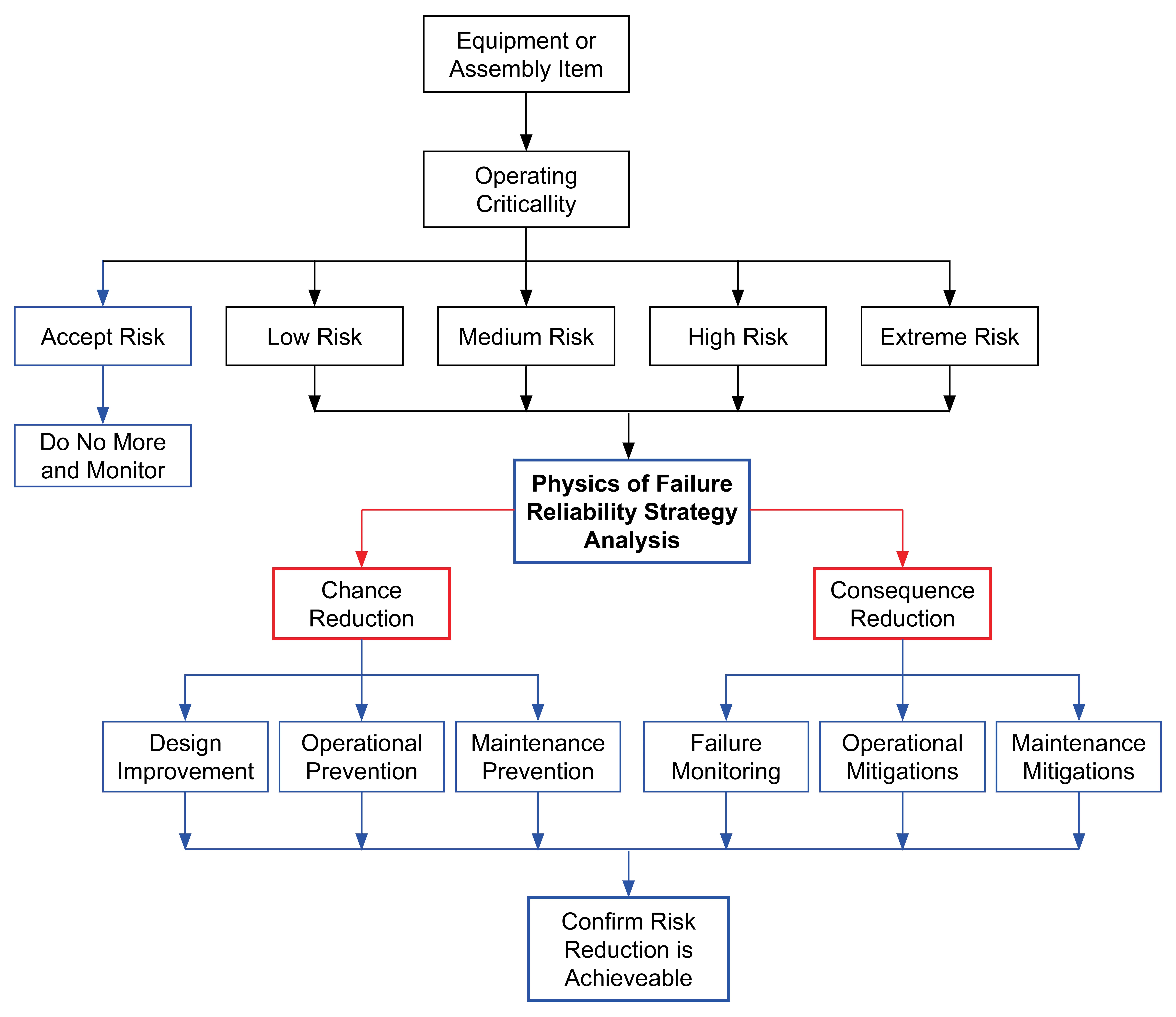
In PWW the Physics of Failure Reliability Strategy (PoFRS) Analysis is used to select the right engineering design, suppliers, maintenance and operating requirements to most effectively remove causes of failure throughout the dependency hierarchy. It is used for all risks considered unacceptable (Figure 2) to determine what actions should be done to reduce operating risk. PoFRS follows the Stress-to-Process Asset Management Model. Starting with risks to component microstructure and working up the hierarchy, the analysis specifies the strategy, knowledge, skills and practices required in the business and asset life cycle processes to achieve component reliability.

Each mechanism cause of a critical part’s failure is identified and addressed one by one until the part’s lifetime risk control plan is complete. The risk control plan covers all that will be done during the life cycle to remove or significantly reduce operating risk. It lists the mix of design, manufacture, supply chain, operations, and maintenance activities to lower the risk of microstructure destruction and deliver high equipment reliability.
Filed Under: Articles, Maintenance Management, on Maintenance Reliability

by Mike Sondalini Leave a Comment

 Developing Maintenance Strategy for a Sheet of Paper 

 Developing Maintenance Strategy for a Sheet of Paper 

 How do you work-out the right life-cycle maintenance strategies? Does one strategy apply throughout an asset’s life? What influences the choices and decisions as to what maintenance to do and when it should be done? How much money and resources do you expend in the maintenance of an asset? To keep the concepts behind these important questions on maintenance strategy selection simple they are applied to a sheet of paper.

[Read more…]

Filed Under: Articles, Maintenance Management, on Maintenance Reliability

by Mike Sondalini Leave a Comment

Equipment Defect Elimination Strategy

Equipment Defect Elimination Strategy

If you want to drastically reduce maintenance costs, stop lost production, eradicate unplanned outages and equipment breakdowns, you need to stop the continual introduction of defects and errors into your operation.

You do that by using quality management practices to drive continuous improvement of your management systems and so continuously improve the business processes, and your peoples’ knowledge.

Abstract:

To reduce maintenance costs and production downtime it is necessary to reduce the causes of the maintenance and downtime.  Both maintenance and downtime are an effect and not a cause.  The causes can be traced back to defects and errors from a variety of sources.  Knowing that defects eventually lead to future equipment failures, production downtime and lost profits, it is necessary put strategies into place to purposely prevent them occurring in the first place and to eliminate them if they are present.

[Read more…]

Filed Under: Articles, Maintenance Management, on Maintenance Reliability

by Mike Sondalini Leave a Comment

31 Best Practice Maintenance Management Tips

31 Best Practice Maintenance Management Tips

Here is a simple checklist of 31 maintenance management tips that you can use to improve your reliability and maintenance results.

Use it as a guide to start you thinking which maintenance management improvement strategies to use to lower your maintenance and operational costs.

The 31 maintenance management tips list below takes the form of a bullet-point list so it can be quickly reviewed. Should you wish more information in detail on any of the 31 maintenance management tips, then please read the PDF article 31 Sure Ways to Lower Operating Assets Maintenance Costs and Improve Reliability. If you have any questions from the article please contact us on the email address shown in the Contact Us page.

[Read more…]

Filed Under: Articles, Maintenance Management, on Maintenance Reliability

by Mike Sondalini Leave a Comment

What is Equipment Reliability and How Do You Get It? 

What is Equipment Reliability and How Do You Get It? 

 High equipment reliability is a choice and not an accident of fortune. To a great extent you can choose how long you want between equipment failures. You can deliver high equipment reliability by ensuring the chance of incidents that cause failures of equipment parts are low. The secret to remarkably long and trouble-free equipment lives is to keep parts and components at low stress, within good local environmental conditions, so there is little risk they are unable to handle their design duty. If there is nothing to cause a failure, the failure will not happen and your equipment continues in service at full capacity and full availability. 

For maintenance practitioners, it is the use of precision maintenance backed-up with condition monitoring applied as a tool to prove maintenance work is done precisely, that provides the foundation for exceptional equipment reliability.

[Read more…]

Filed Under: Articles, Maintenance Management, on Maintenance Reliability

by Mike Sondalini Leave a Comment

Show Me the Money in Maintenance! 

Show Me the Money in Maintenance! 

Find the fortune maintenance can make for your business. Unfortunately, maintenance people get praise when they repair breakdowns. This embeds and promotes a culture of equipment failure acceptance in a business. Maintenance must be used to prevent equipment failures, not fix them. If you want to start a culture of failure elimination in your business you have to start putting a money value on the breakdowns prevented by Maintenance. You have to start praising and recognising them for the breakdowns they didn’t let happen. Maintenance needs to be praised and glorified for the money it makes a company, not singled out for the money it spends.

[Read more…]

Filed Under: Articles, Maintenance Management, on Maintenance Reliability

by Mike Sondalini Leave a Comment

 How to Make RCFA a Successful Business Improvement Strategy 

 How to Make RCFA a Successful Business Improvement Strategy 

Many companies adopt root cause failure analysis (RCFA) and then drop it. They use it for while and get no benefit. RCFA is often ineffective when used to solve individual problems. But when used to find systematic causes of problems and improve business systems, it provides grand payback for the effort. 

Keywords: root cause failure analysis, business process improvement 

[Read more…]

Filed Under: Articles, Maintenance Management, on Maintenance Reliability

by Mike Sondalini Leave a Comment

Can Your Engineering and Maintenance Processes Deliver the Reliability You Want? 

Can Your Engineering and Maintenance Processes Deliver the Reliability You Want? 

Much of what we do in engineering and maintenance we accept without question. People say, ―It‘s been done that way for decades,‖ implying that it must be correct. But for equally as many decades have come stories of failed and broken machinery, plant and businesses. On one hand we continue to unquestioningly do what has been done for generations, yet on the other hand we cannot stop equipment failing. There is a subtle connection between the two of which we are only just becoming aware. The connection is obvious when you realise that we have been running our businesses by risk and luck, and not on facts and understanding.

[Read more…]

Filed Under: Articles, Maintenance Management, on Maintenance Reliability

by Mike Sondalini Leave a Comment

 RCFA and 5-Whys Tips for Successful Use 

 RCFA and 5-Whys Tips for Successful Use 

When you do a Root Cause Failure Analysis or a 5- Why there are no promises that you will actually find the true root cause and fix your problem. Investigating the cause of a failure is fraught with traps, such as making wrong assumptions, insufficient evidence, misinterpreting the evidence, misunderstanding, personal bias and second-guessing. There are necessary issues you need to be aware of that affect the RCA and 5-Why methods, and there are some good practices that you can adopt to improve your chance of doing a successful analysis when applied to equipment failures. 

[Read more…]

Filed Under: Articles, Maintenance Management, on Maintenance Reliability

by Mike Sondalini Leave a Comment

Ageless Maintenance and Reliability Success Secrets 5

Ageless Maintenance and Reliability Success Secrets 5

 Maintenance and reliability problems are not new. Our forefathers and ancestors understood the value of smart maintenance and high reliability. They learnt from experience and passed their knowledge down to us through parables, stories, and sayings. The timeless advice of our forbearers on successful maintenance and reliability is as applicable to us now as it has been to every generation since the dawn of civilisation.

[Read more…]

Filed Under: Articles, Maintenance Management, on Maintenance Reliability

by Mike Sondalini Leave a Comment

Outstanding Maintenance and Reliability for Everyone

Outstanding Maintenance and Reliability for Everyone

Maintenance And Reliability Like They Should Be Done!

What can a 25-year veteran of condition monitoring tell you about how to do better maintenance and get
better reliability?

First a little background. Max started his vibration analysis monitoring company back in the late 1970’s. He and his company developed expertise and technologies in condition monitoring over many years. They monitored and reported on a large range and number of machines, and worked for numerous companies. He and his people were the recognised experts in vibration monitoring and control. [Read more…]

Filed Under: Articles, Maintenance Management, on Maintenance Reliability

by Mike Sondalini Leave a Comment

Useful Key Performance Indicators for Maintenance 

Useful Key Performance Indicators for Maintenance 

A useful Maintenance Key Performance Indicator (KPI) drives reliability growth while guiding your choices for improving maintenance effectiveness and efficiency. A useful maintenance KPI lets you identify the issues causing your maintenance effects and helps you select the right strategy to either support or correct the actions producing the results. It is important that when you select a range of maintenance KPI you pick those that let you improve both equipment reliability and maintenance performance and not simply tell you that you have problems in your business.

[Read more…]

Filed Under: Articles, Maintenance Management, on Maintenance Reliability

by Mike Sondalini Leave a Comment

Raise the ‘R’ 

Raise the ‘R’ 

Getting extraordinary equipment reliability


 This paper is primarily on understanding how to get extraordinary equipment reliability. The paper explains where equipment failures start in organisations. It clarifies the need to recognise the effect, and to control the influence, of interacting processes across the life cycle. It explains the successful philosophies and practices used in high reliability organisations and it introduces a reliability-causing methodology to help companies find what to do to become high-reliability organisations.

[Read more…]

Filed Under: Articles, Maintenance Management, on Maintenance Reliability

by Mike Sondalini Leave a Comment

Don’t Waste Your Time and Money with Condition Monitoring 

Don’t Waste Your Time and Money with Condition Monitoring 

Predictive Maintenance applies condition monitoring techniques to discover potential failures. While finding a problem before it becomes a failure is good, companies can end up with so much work that maintenance backlog skyrockets, maintenance costs blow-out and people burn-out. Understanding when a predictive maintenance strategy can cause uneconomic maintenance, or why condition monitoring can produce unending failures, is vital if you want reliable equipment with low maintenance cost.

[Read more…]

Filed Under: Articles, Maintenance Management, on Maintenance Reliability

by Mike Sondalini Leave a Comment

The Role of Chance and Luck in Your Equipment Failures 

The Role of Chance and Luck in Your Equipment Failures 

Plant and equipment do not fail by accident. There are causes. Whether equipment fails depends on the capacity of their parts to handle stresses, when stresses are applied and the size of those stresses. These are probabilistic events – they are random, with many possibilities. Timing the start of failure, or its continuation to a breakdown, is mostly speculation because it depends on which past and future scenarios occur. It seems that luck and chance has a large say on the lifetime reliability of equipment. But there is a way to guide equipment reliability and performance toward the results you want.

[Read more…]

Filed Under: Articles, Maintenance Management, on Maintenance Reliability

  • 1
  • 2
  • 3
  • …
  • 7
  • Next Page »
Headshot of Mike SondaliniArticles by Mike Sondalini
in the Maintenance Management article series

Join Accendo

Receive information and updates about articles and many other resources offered by Accendo Reliability by becoming a member.

It’s free and only takes a minute.

Join Today

Recent Posts

  • Business Risk Hierarchy
  •  Developing Maintenance Strategy for a Sheet of Paper 
  • Work Quality Assurance with ACE 3T Standard Operating Procedures
  • The Power of Empowering Employees
  • Book Review: An Elementary Guide to Reliability

© 2025 FMS Reliability · Privacy Policy · Terms of Service · Cookies Policy