Understanding the CI Process for Asset Strategy.
[Read more…]Your Reliability Engineering Professional Development Site
A listing in reverse chronological order of these article series:
by George Williams Leave a Comment
by Karl Burnett Leave a Comment

The Street Railway Journal, later renamed the Electric Railway Journal was published from 1884 until 1931. The first 1884 volume described the reason for the journal’s existence, to serve the streetcar industry better than journals focusing on heavy rail. In 1884 it was most common for horses to pull street cars on fixed rails. The importance of animal power was reflected in the articles about managing animals and many advertisements for grooming machines, traces, harnesses, and cures for horse colic. A rarer method of motive power was a steam engine that drove an underground tow cable. The second 1884 volume reported several experiments in using electric motors to power the cable instead of steam.
[Read more…]
The term “reliability improvement journey” is well-established in the chemical process industry. The decade-long, tortuous journey of one company is shown in terms of operational availability (i.e., production) and relative maintenance cost at Figure 1.
[Read more…]by Robert (Bob) J. Latino Leave a Comment

We often hear our organizations referring to their workforce as their greatest ‘asset’. But are they really?
Let’s first define ‘asset’ from a financial perspective:
“In financial accounting, an asset is an economic resource. Anything tangible or intangible that can be owned or controlled to produce value and that is held by a company to produce positive economic value is an asset. Simply stated, assets represent value of ownership that can be converted into cash (although cash itself is also considered an asset)”
[Read more…]by James Kovacevic Leave a Comment
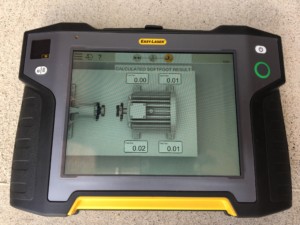
Imagine (or maybe you don’t have to) that you take out your brand new Easy-Laser system, and proceed to perform a shaft alignment. However, it seems that no matter what you do, you can’t get a great alignment. What is going on? The foundation looks good, new shims were used, the asset is clean, and there is no pipe strain. After some discussion with others, they mention a term in which you are unfamiliar with, soft foot.
[Read more…]
by James Reyes-Picknell Leave a Comment

Proactive maintenance requires fewer people and is more suited to physical distancing, yet cost-savings measures are driving more reactive work and workplace crowding than necessary. Proactive maintenance is more “Covid”. You have laid-off workers, contractors, and reduced spending on maintenance and parts. In fact, Covid-19 presented you with a great savings opportunity! Have you done anything to make sure those costs stay down though? Short term maintenance cost savings are easy to achieve. but they bite hard later! [Read more…]
by Nancy Regan Leave a Comment

There’s a big difference between MTBF and Useful Life. The two values are often misunderstood and misapplied when assigning Preventive Maintenance task intervals. In this video, I’ll explain which one is used to assign intervals for Scheduled Replacement and Scheduled Restoration tasks. We’ll also discuss Operating Context and how that can affect Manufacturer Recommended Maintenance. This is an “edutainment” video. If you’d like to skip the fun stuff (although I don’t know why you’d want to ☺️), I’ve time stamped the Reliability Moments below. Enjoy!
Read moreby George Williams Leave a Comment

George Williams, CEO of ReliabilityX, explains what an Asset Management System is. If you have any questions or comments please feel free to share them in the comments below. We would love to answer them.
[Read more…]by Robert (Bob) J. Latino Leave a Comment

If you had to give a grade to your current Root Cause Analysis (RCA) initiative, what would it be? How would you come to that conclusion (grade)? The paradox many face with such initiatives is drawing the distinction between compliance and actual effectiveness. What would our RCA grade be based on? In this article we will focus on the key elements to quantifiably measure your RCA initiative, so the organization can focus on the elements of the initiative that are lacking.
[Read more…]
A friend I have been mentoring for quite some time now asked me recently if I had a set of personal expectations I hold myself to. As part of our conversation, I quickly came up with 4 or 5 things and then later on sat down to list out the expectations I try to live by.
I think my parents set the groundwork for what I would consider my list of personal expectations. My Mom and Dad had sound values and I think it’s those values that influence our expectations. With that said, here is my list;
by James Kovacevic Leave a Comment
As an Enterprise Maintenance Planner, you manage the backlog, provide a maintenance schedule, liaise with Maintenance and Operations, maintain excellent knowledge of the facility and its equipment, and find ways to optimize productivity. Phew! That’s no small to-do list.
Every day, you’re working hard to:
by James Reyes-Picknell Leave a Comment

Pay $3k now to keep out of trouble or more to get out of jail later. Your plant asset performance is down and you know it. It’s only a matter of time before there is an accident. You need to improve but funds are limited.
The expert consultants will want to begin with some sort of an assessment. They will identify problems and offer solutions, for a price (likely $50k or more). You can’t afford it. Some consultants might even be former employees. Ask yourself, “if they worked here before, then why didn’t she/he fix what was wrong when they were here?” Consider getting a different consultant but you will still struggle with a big inconvenient truth! [Read more…]
by George Williams Leave a Comment

Interview with Terrence O’Hanlon and Maura Abad from Reliabilityweb. Discussion includes the changing landscape of reliability, digitilization, and how Reliabilityweb is adapting to serve their customers.
by Bryan Christiansen Leave a Comment
Reliability engineers are responsible for keeping equipment or facilities operational, extending their useful lives, and managing maintenance costs by formulating relevant maintenance management policies and programs. They offer guidance to maintenance teams, analyze existing maintenance programs to identify opportunities for improvement. Unlike maintenance supervisors, these professionals rarely engage in the daily execution of maintenance tasks. The roles of reliability engineers span the entire lifecycle of an asset beginning from the design phase, operational stage to disposal. How do reliability engineers influence the gradual improvement of maintenance management in different organizations? [Read more…]
by Robert (Bob) J. Latino Leave a Comment

In this original post, A Mechanic’s Story: Basic Component Fatigue, we took a detailed journey through the physical side of a shaft failure RCA. We stopped at the physical side of that failure, parallel misalignment. However, stopping at the component level of failure does not constitute a credible and thorough RCA. Actually stopping at this level is more along the lines of a Shallow Cause Analysis (SCA). So let’s explore what makes the difference between a Shallow Cause Analysis and a Root Cause Analysis (RCA).
In the previous post we stopped at parallel misalignment. We will continue drilling from that point down. We ask ‘How could we have had parallel misalignment?’ Our team of subject matter experts (SME) hypothesizes 1) it was either misalignment at installation or 2) it became misaligned during operations.
[Read more…]
Ask a question or send along a comment.
Please login to view and use the contact form.