Reliability engineers are responsible for keeping equipment or facilities operational, extending their useful lives, and managing maintenance costs by formulating relevant maintenance management policies and programs. They offer guidance to maintenance teams, analyze existing maintenance programs to identify opportunities for improvement. Unlike maintenance supervisors, these professionals rarely engage in the daily execution of maintenance tasks. The roles of reliability engineers span the entire lifecycle of an asset beginning from the design phase, operational stage to disposal. How do reliability engineers influence the gradual improvement of maintenance management in different organizations? [Read more…]
on Maintenance Reliability
A listing in reverse chronological order of these article series:
- Usman Mustafa Syed — Aasan Asset Management series
- Arun Gowtham — AI & Predictive Maintenance series
- Miguel Pengel — Asset Management in the Mining Industry series
- Bryan Christiansen — CMMS and Reliability series
- James Reyes-Picknell — Conscious Asset series
- Alex Williams — EAM & CMMS series
- Nancy Regan — Everday RCM series
- Karl Burnett — History of Maintenance Management series
- Mike Sondalini — Life Cycle Asset Management series
- James Kovacevic — Maintenance and Reliability series
- Mike Sondalini — Maintenance Management series
- Mike Sondalini — Plant Maintenance series
- Andrew Kelleher — Process Plant Reliability Engineering series
- George Williams and Joe Anderson — The ReliabilityXperience series
- Doug Plucknette — RCM Blitz series
- Robert Kalwarowsky — Rob's Reliability Project series
- Gina Tabasso — The Intelligent Transformer Blog series
- Tor Idhammar — The People Side of Maintenance series
- André-Michel Ferrari — The Reliability Mindset series
A Mechanic’s Story: The Human & System’s Contribution

In this original post, A Mechanic’s Story: Basic Component Fatigue, we took a detailed journey through the physical side of a shaft failure RCA. We stopped at the physical side of that failure, parallel misalignment. However, stopping at the component level of failure does not constitute a credible and thorough RCA. Actually stopping at this level is more along the lines of a Shallow Cause Analysis (SCA). So let’s explore what makes the difference between a Shallow Cause Analysis and a Root Cause Analysis (RCA).
In the previous post we stopped at parallel misalignment. We will continue drilling from that point down. We ask ‘How could we have had parallel misalignment?’ Our team of subject matter experts (SME) hypothesizes 1) it was either misalignment at installation or 2) it became misaligned during operations.
[Read more…]10 Tips for Getting the Most Out of Your Next Maintenance Assessment
Assessments are a key tool for driving sustainable improvements in you Maintenance, Reliability, or Asset Management program.
When you hear the work assessment or audit, does it send shivers down your spine? Do you envision a week or two of some “expert” digging through your data, processes, and performance, looking to get you in trouble for something you did or didn’t do?
While some audits may be to find issues or wrongdoing, most assessments should be viewed as a key activity to improving your current programs or systems. These assessments, are used to compare your current program to industry best practices, identifying areas which could be improved. The assessment typically includes a Recommended Course of Action (RCOA) which highlights what gaps should be focused on first. So, whether the assessment is driven by corporate, internally or externally, how can you get the most out of a Maintenance assessment? [Read more…]
How to Keep the Boss Out of Jail

Here’s a case where they didn’t know how to keep the boss out of jail! In Jan 2019, a mine tailing dam (the structure used to contain waste from mining operations) collapsed. The video below shows the event. 259 people were confirmed dead and 11 declared missing. Cause – liquefaction – a commonly occurring phenomenon, and one that this particular mine had been warned about. Outcome – fatalities and associated human cost, suspended operations (for a brief period), company reputation, criminal charges (executives and engineering consultants). Risk management is an often neglected part of our job. [Read more…]
There’s More to Maintenance Software Than Work Orders

At its core, maintenance software is a tool that allows you to generate and schedule work orders and get the right people to do each job. Maintenance software automates paper processes by enabling people to create requests for maintenance work. Maintenance workers then enter the requests into the computerized maintenance management system software (CMMS), which generates the work orders. However, when it comes to the functions of a CMMS, work order generation is only the tip of the iceberg.
[Read more…]Interview with Adrian Messer, Manager of US Operations for UE Systems
The Keys To Successful RCM Implementation

If you have attended any Maintenance and Reliability conference in the last several years, chances are you have seen a presentation on the struggles of RCM implementation. Most present that over 70% of companies who attempt to get started with Reliability Centered Maintenance fail to implement the recommended mitigating tasks identified in their analysis.
[Read more…]What Happened?

As many of you know, I have been encouraging my LI contacts for years to take me up on my offer to review any pictures they have of failed parts, and we would try and provide them some preliminary feedback. Well, someone finally took us op on the offer and we wanted to share what was learned (we obtained permission to do so providing the company name was not used).
Here was the original inquiry via LI instant messenger along with the pictures:
“Dear Sir, As per your advise, I’m sending you a photo of failed flange bolts. I belief they were failed due to fatigue. Could you please review them and identify/ label their failure mode. After your comments on this photo, I’ll put up a recommendation on my RCA. Looking forward to hear from you. Regards.”
[Read more…]Building a Recommended Course of Action
How to Translate an Assessment into an Action Plan
An assessment was performed and many opportunities identified, but it has been three months, and nothing has changed. Does this sound familiar? As discussed in a previous post, the goal of an assessment is to identify gap to best practices and provide the basis to develop a plan to move forward. However, many times an assessment is performed, the results put into a binder and put on the shelf (does this sound like your RCM initiative?).
[Read more…]
Business Case Estimator Insights

Our business case estimator insights show you both savings and earnings potential for improvements in maintenance and reliability. If you are reading this, you probably think there is some opportunity to improve your operational reliability and maintenance performance. You might want to create a business case for change that you can use to get senior management approval and funding. You are in the right place. We’ve created the tools for you to do that, they are readily accessible and inexpensive (the first step is even free). After a period of isolation and/or skeleton staffing, you can probably see problems that may be more hidden when operating with a full staff. Now is a good time to address those to bring performance up as a part of your “new normal”. [Read more…]
Interview with Jeff Hay, CEO of RDI Technologies
Is There a Direct Correlation Between Reliability & Safety?

“Assumption 1: Safety is increased by increasing system or component reliability. If components or systems do not fail, then accidents will not occur. (p. 7)
This assumption is one of the most pervasive in engineering and other fields. The problem is that it is not true.
Safety is a system property, not a component property, and must be controlled at the system level, not the component level.
New Assumption 1: High reliability is neither necessary nor sufficient for safety. (p.13)”
These statements were excerpted from Nancy Leveson’s “Engineering a Safer World“.
This contradicts the common belief there is a direct correlation between Safety and Reliability. I personally, being in the Reliability field for 30+ years, believe there is a correlation between Reliability and Safety. But I would assert that it is not a direct correlation.
[Read more…]Be Audit Ready: How to Ensure Your Maintenance Program Can Stand Up to Regulators
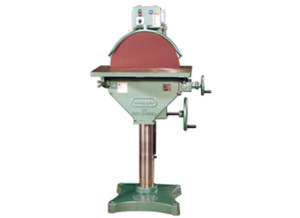
When was the last time you were involved with a regulatory body? I can remember a time when a millwright was involved in an incident in our maintenance shop. He was using a 20″-disc grinder when the piece of steel he was grinding got caught and pulled his hand into the grinding wheel. He was off for a quite a few weeks, but he did not sustain any long-term injuries.
[Read more…]
What I’m learning about Online Training

Online training is actually a pretty good way to go! For me, that’s a revelation. The isolation and distancing measures being imposed due to the Corona Virus pandemic have been a game-changer in our business and personally. In the process of shifting training content to online formats, I’ve learned a lot.
My conclusion is that online training isn’t just an alternative to the “real thing”, it can actually be a better experience.
[Read more…]Upkeep Keynote 23FEB2021

Keynote address given for the 2021 UpKeep “The Maintenance Community” career development
[Read more…]- « Previous Page
- 1
- …
- 41
- 42
- 43
- 44
- 45
- …
- 97
- Next Page »