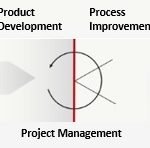
In reviewing several previous articles in this article series, it’s apparent there is much in common with product development, project management and process improvement.
Let’s look at a brief list that considers a structured approach vs. unstructured
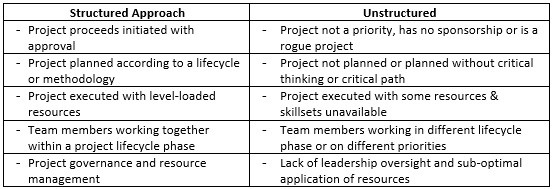
While this list is pretty “high-level” it reveals the importance of project leadership, governance and management. A structured approach (for example a phase-gate structure, DMAIC or agile/scrum) enables management and planning, which enables governance and governance enables leadership.
Some structured approaches may be more suitable than others depending on the type of project. However, any structure (with leadership, governance and management in mind) is probably better than none.
 In the previous articles, we looked at what type of analysis to use to evaluate the effectiveness of the PMs and if they are cost effective. Once the PMs have been optimized to ensure they are addressing the right failure modes, then they need to be made efficient. Below is an excerpt from a recent article in




 Would you spend $100 every week to prevent a possible issue that will result in a loss of $10? Probably not, so why is that we do that with our maintenance programs every single day? Often, PM and PdM activities are put into place without any thought to the economic impact of the activity. While in theory the PM or PdM activities will prevent or mitigate the consequences of the failure, is implementing one of these activities the right thing to do?